Stuart’s quiet comic book store backroom is about to expand into a full-blown intergalactic stage. The latest spinoff from The Big Bang Theory universe shifts focus from Caltech physicists to the man who quietly manned the cash register at The Comic Center of Pasadena—Stuart Bloom (Kevin Sussman). The long-rumored project, now officially titled Stuart Fails to Save the Universe, offers a surreal, heartfelt, and deeply awkward journey that feels both unexpected and oddly inevitable.
The first look images and teaser scenes confirm what fans feared and hoped: Stuart is once again out of his depth—but this time, the stakes are cosmic.
Why Stuart? The Unexpected Hero of the TBBT Universe
Of all The Big Bang Theory characters, Stuart was the least likely candidate for a leading role. He wasn’t a genius, didn’t have Howard’s bravado or Raj’s charm, and lacked Sheldon’s memorably abrasive confidence. Instead, Stuart brought melancholy humor, financial instability, and a quiet yearning for connection.
But that’s precisely why he works as the anchor for a new narrative. While the original series celebrated intellectual brilliance, this spinoff embraces emotional vulnerability. Stuart isn’t trying to win a Nobel Prize—he’s trying to pay rent, keep his business afloat, and maybe, just maybe, get a date.
Now, in Stuart Fails to Save the Universe, his modest ambitions are hijacked by a bizarre twist of fate: an alien AI mistakenly names him the “Chosen One” capable of preventing universal collapse.
“They picked the wrong guy,” Stuart mutters in the first teaser. “I can’t even keep my succulents alive.”
The Premise: A Cosmic Blunder with Heart
The show’s core concept hinges on irony: Stuart is selected by a hyper-advanced galactic system as the sole being capable of recalibrating the “Harmonic Core” of the universe. Why? Because, according to the AI, his brainwave patterns emit a unique “unresolved emotional frequency” that can stabilize collapsing quantum fields.
Of course, Stuart has no idea what that means.
Instead of training montages or sudden power-ups, the series leans into absurd miscommunication. Episodes follow Stuart as he bumbles through alien technology, misunderstands cosmic prophecies, and tries to explain interdimensional threats to his skeptical friends back on Earth—especially when they assume he’s just having another anxiety spiral.
One standout scene shows Stuart attempting to activate a universe-stabilizing device using a mix of Dungeons & Dragons rules, a half-charged iPhone, and a motivational poster from his therapist’s office.
First Look: Visual Tone and Style
The leaked first-look images reveal a surprisingly polished aesthetic. The comic book store remains a central hub, now occasionally folding into surreal, animated backdrops when Stuart interfaces with the AI. Think Doctor Strange meets The Office, with a splash of Wes Anderson symmetry.
One still shows Stuart wearing a glowing headset made of repurposed gaming gear, standing in front of a wall-sized holographic star map—while his cat, Mr. Fluffles, claws at a dangling wire.
Another features a dream sequence where Stuart imagines himself as a caped superhero—only to trip over a display case filled with rare Spawn #1 variants.
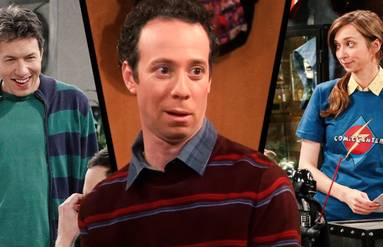
The visual language nods heavily to sci-fi tropes but undercuts them with mundane details: empty ramen containers, overdue bills, and awkward family Zoom calls.
Character Evolution: From Background Joke to Emotional Core
The success of the spinoff rests on whether audiences accept Stuart not just as a punchline, but as a protagonist worth rooting for. Early scripts suggest deep character development.
In one episode, Stuart confronts his parents about years of emotional neglect—midway through negotiating a truce between two warring alien species. The scene doesn’t feel forced; instead, it mirrors how personal growth often happens amid chaos.
His relationships also expand. Bernadette (Melissa Rauch) appears in a guest arc, offering surprisingly sage advice: “You don’t need to save the universe. You just need to show up.”
Meanwhile, flashbacks reveal Stuart’s teenage years—his first comic purchase, a failed school play, and the moment he realized he didn’t fit in. These moments humanize him, making his accidental heroism feel earned.
Supporting Cast: Familiar Faces, New Roles
While Stuart is the lead, the show doesn’t exist in a vacuum. Recurring characters bridge the old and new worlds:
- Penny (Kaley Cuoco) appears in a two-episode arc as a lifestyle influencer who unknowingly spreads a meme that destabilizes an alien civilization’s belief system.
- Leonard (Johnny Galecki) makes a brief appearance via video call, offering physics advice while trying to calm a crying baby.
- Howard (Simon Helberg) and Raj (Kunal Nayyar) team up for a B-plot involving a failed government contract to build a “universal translator” that only works with 80s pop lyrics.
- Amy (Mayim Bialik) guest-stars as a neuroscientist consulted on Stuart’s “emotional resonance” scans—leading to a cringe-worthy brain scan session involving childhood trauma and his favorite sandwich.
Even Sheldon (Jim Parsons), now an off-screen narrator, delivers dry commentary, calling Stuart “a statistically improbable anomaly with minor narrative utility.”
These cameos aren’t just fan service—they ground the absurdity and remind viewers that Stuart’s world, however expanded, is still connected to the one they know.
Tone and Humor: Awkward, Absurd, and Touching
The show inherits TBBT’s sitcom rhythm but leans harder into surreal humor. Jokes come from mismatched contexts: Stuart trying to use a universal reset button while on hold with his landlord, or a five-minute debate on whether Star Wars or Star Trek offers better crisis management models.
Yet, emotional beats cut through the silliness. In one scene, Stuart confesses to the AI, “I’ve spent my life feeling invisible. Now the universe needs me—and I’m still not sure I matter.”
The writing avoids making Stuart a fool. Instead, his failures are relatable—procrastination, self-doubt, and overthinking. His wins come not from brilliance, but persistence.
“You don’t have to be the smartest,” the AI tells him. “You just have to care enough to keep trying.”
Behind the Scenes: Creators and Vision
Chuck Lorre and Steven Molaro, key architects of The Big Bang Theory, return as executive producers. But the creative lead is Maria Kang, a writer known for her work on Abbott Elementary and Ted Lasso. Her touch is evident in the balance of humor and heart.
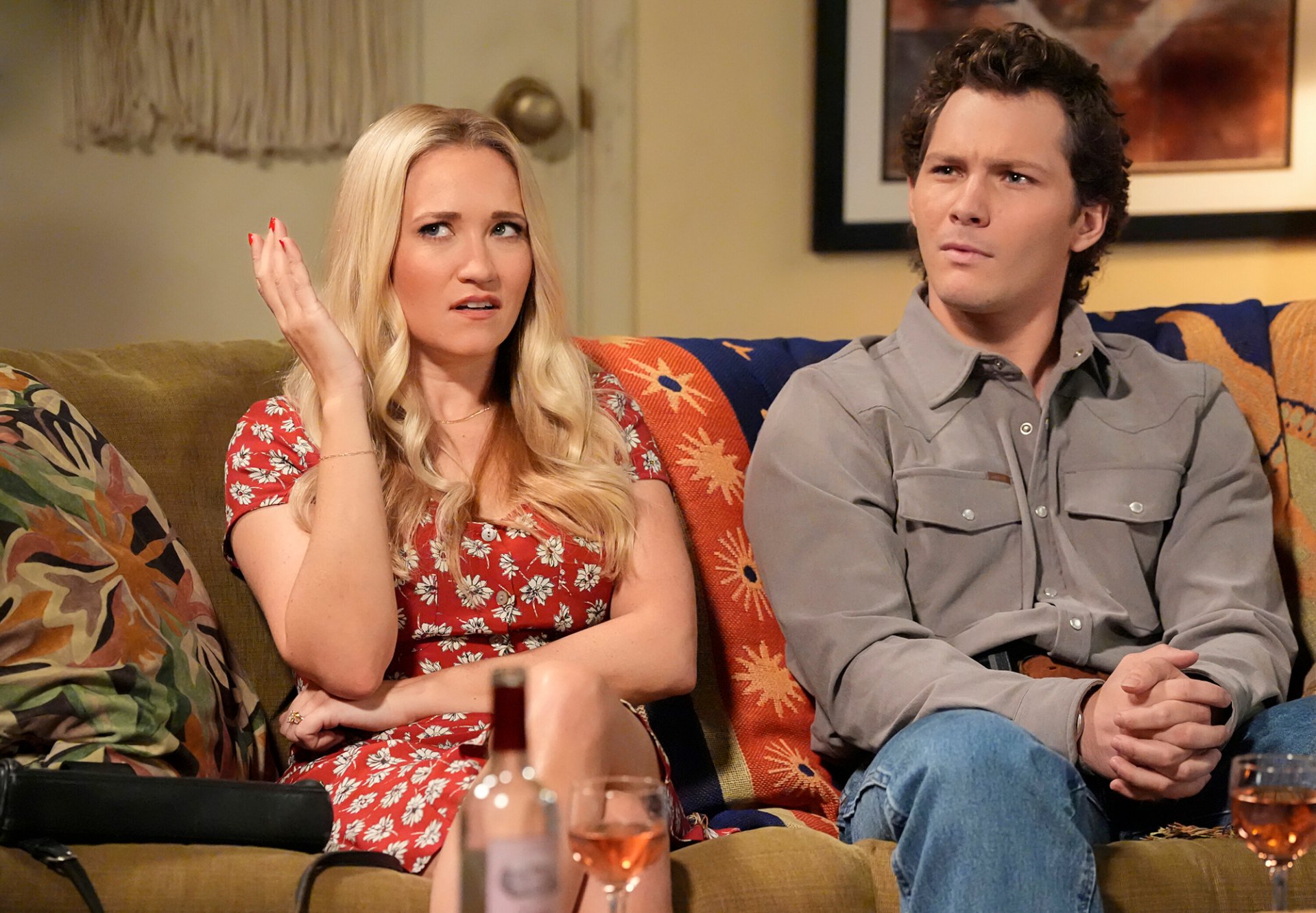
Kevin Sussman, long a supporting player, steps into lead actor responsibilities with quiet confidence. In interviews, he’s described the role as “the culmination of ten years of being the guy nobody noticed.”
Filming takes place on updated versions of the original TBBT sets, with new soundstages built for alien environments—often shot using practical effects mixed with digital augmentation to preserve a tactile feel.
How This Spinoff Stands Out in the Sitcom Landscape
In an era of reboots and legacy sequels, Stuart Fails to Save the Universe risks feeling like a cash grab. But early material suggests a sharper purpose.
Unlike other spinoffs that double down on established success (e.g., Young Sheldon), this one embraces reinvention. It doesn’t just continue a story—it subverts it. Where TBBT celebrated intellect, this show champions emotional resilience. Where the original mocked social awkwardness, the spinoff finds dignity in it.
It also avoids the trap of over-explaining. The mechanics of the “Harmonic Core” are never fully clarified—because, as the show argues, you don’t need to understand the universe to care about saving it.
Practical Takeaways for Sitcom Writers and Fans For creators studying this show’s approach, several lessons emerge:
- Underdog protagonists work—especially when their struggles are emotional, not just situational.
- Absurd premises need emotional grounding—the bigger the stakes, the more personal the story should feel.
- Cameos should serve the plot, not just nostalgia. Penny’s meme subplot, for example, ties into the theme of unintended consequences.
- Visual contrast enhances comedy—juxtaposing cosmic scale with domestic clutter creates instant humor.
- Silence speaks volumes—Stuart’s pauses, glances, and sighs often deliver more than dialogue.
For fans, the takeaway is simpler: sometimes, the person you least expect is the one who holds everything together—not because they’re special, but because they refuse to give up.
Final Verdict: A Risk That Pays Off
Stuart Fails to Save the Universe could have been a gimmick. Instead, it feels like a necessary evolution of the Big Bang Theory legacy. It honors the original while daring to go somewhere new—emotionally, visually, and narratively.
The first look confirms a show that’s funny, strange, and surprisingly moving. Stuart may not save the universe in the way the AI hoped—but in his own stumbling way, he might just save himself.
Tune in when the series premieres on CBS and streaming platforms. Bring snacks. And maybe a backup plan, in case the universe really is counting on someone like Stuart.
Frequently Asked Questions
Why is Stuart the chosen one in the spinoff? An alien AI selects Stuart because his unresolved emotional frequency uniquely stabilizes collapsing quantum fields—though he has no idea what that means.
Will any original TBBT cast return? Yes, several main cast members appear in guest roles, including Penny, Leonard, Howard, Raj, Bernadette, Amy, and Sheldon (as a narrator).
Is the show a comedy or sci-fi? It’s a sci-fi comedy with heavy emotional themes, blending absurd intergalactic scenarios with Stuart’s everyday struggles.
How many episodes are in the first season? The first season consists of 10 episodes, each 22 minutes long.
Is Kevin Sussman excited about the lead role? Yes—Sussman has called it a “dream come true” after years of playing Stuart in a supporting capacity.
Will the comic book store still be featured? Absolutely. The Comic Center of Pasadena remains a key setting and emotional anchor throughout the series.
Is the show connected to Young Sheldon? Only tangentially. Both are TBBT spinoffs, but they exist in separate narrative spaces with minimal overlap.
FAQ
What should you look for in Stuart Gets Center Stage in New Big Bang Theory Spinoff? Focus on relevance, practical value, and how well the solution matches real user intent.
Is Stuart Gets Center Stage in New Big Bang Theory Spinoff suitable for beginners? That depends on the workflow, but a clear step-by-step approach usually makes it easier to start.
How do you compare options around Stuart Gets Center Stage in New Big Bang Theory Spinoff? Compare features, trust signals, limitations, pricing, and ease of implementation.
What mistakes should you avoid? Avoid generic choices, weak validation, and decisions based only on marketing claims.
What is the next best step? Shortlist the most relevant options, validate them quickly, and refine from real-world results.